The makhana category is becoming an attractive opportunity for retailers, FMCG companies, distributors and emerging food brands looking to build their own snack range.
But launching an own-brand makhana product does not necessarily mean setting up a manufacturing facility.
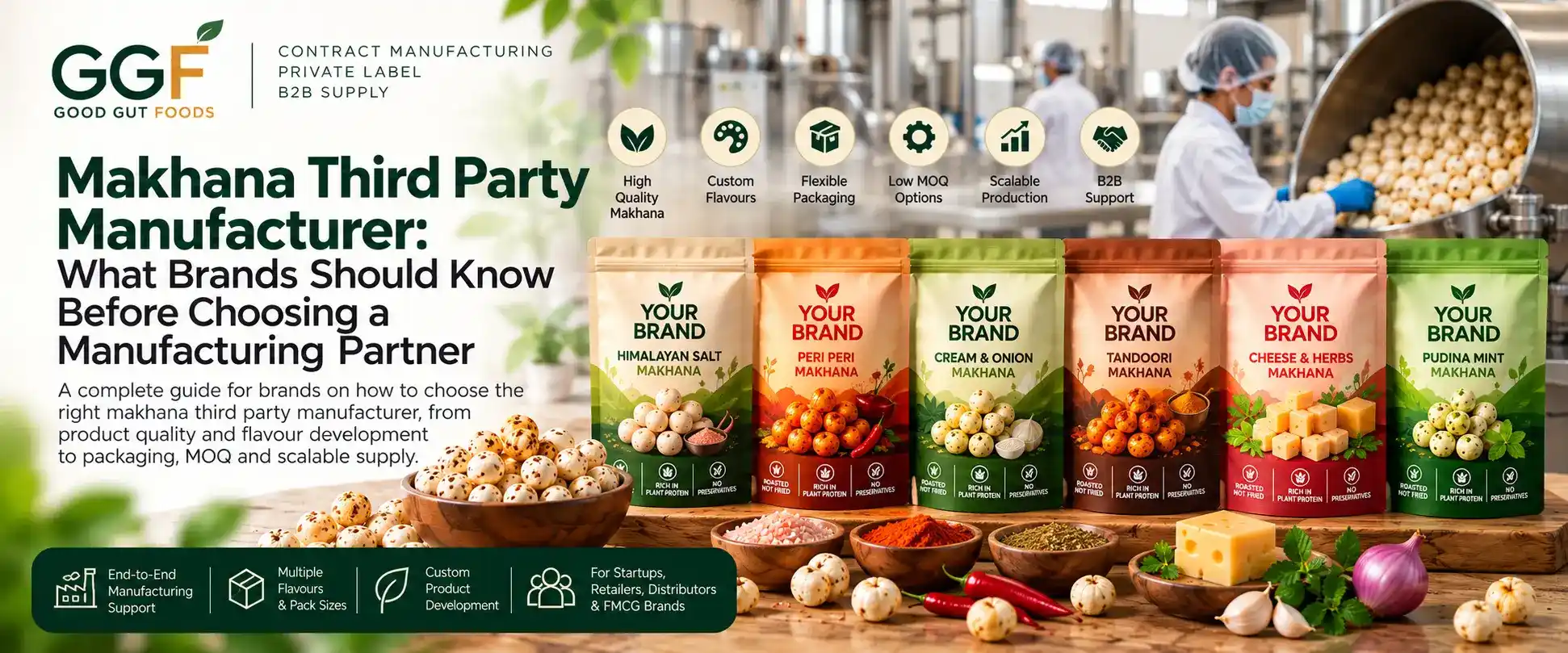
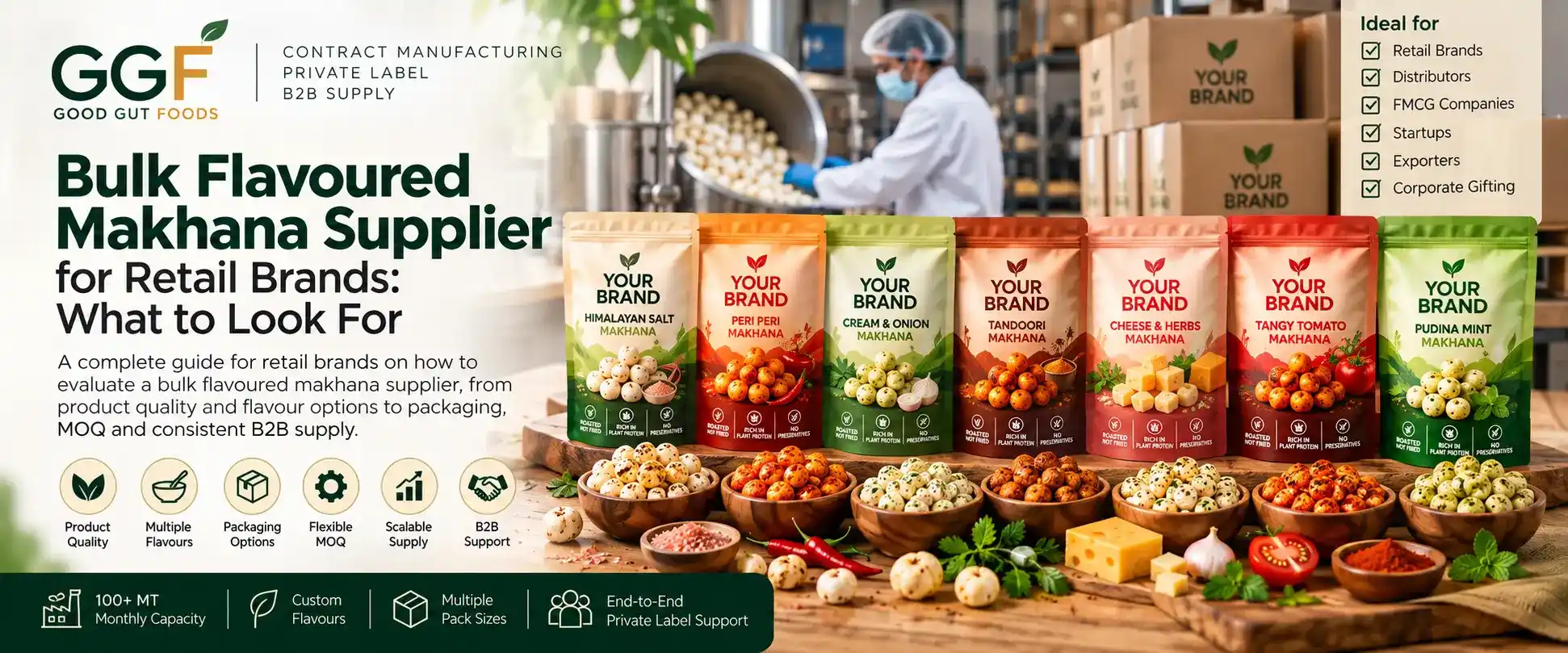
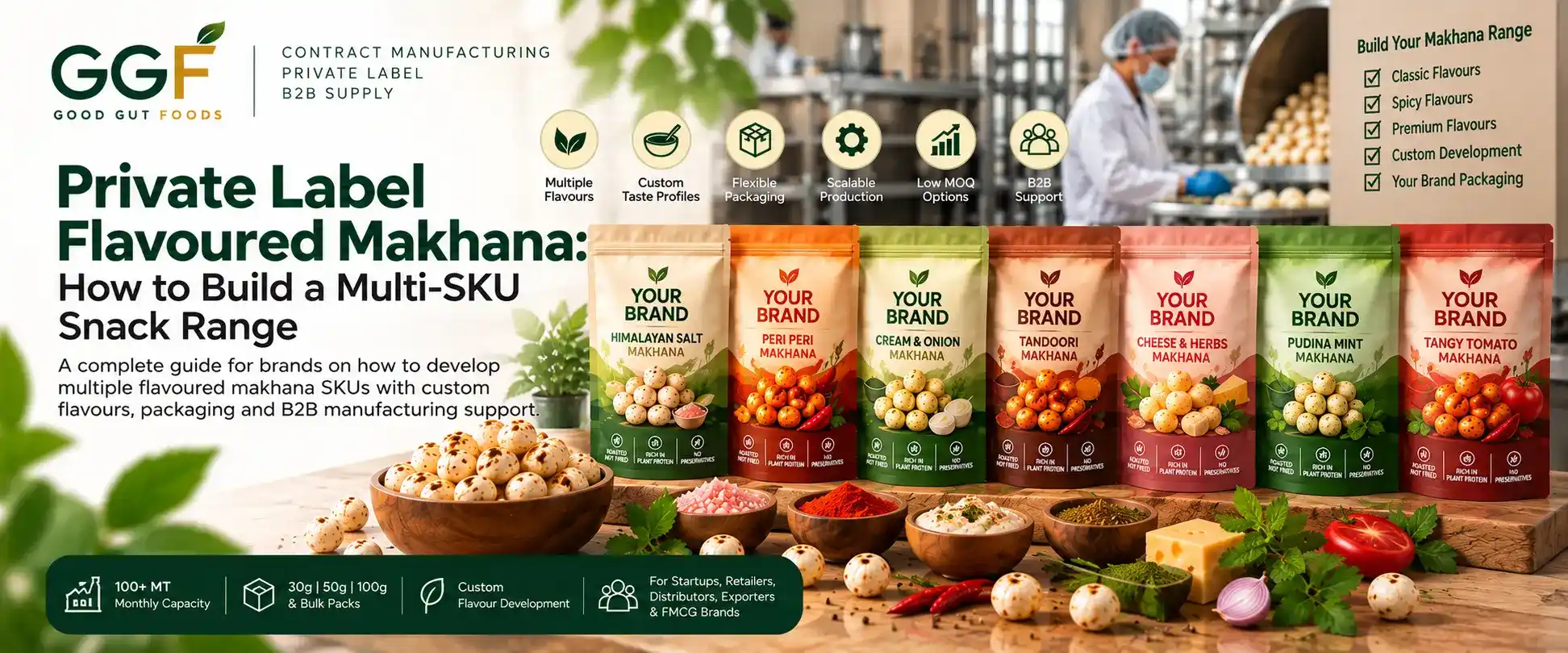
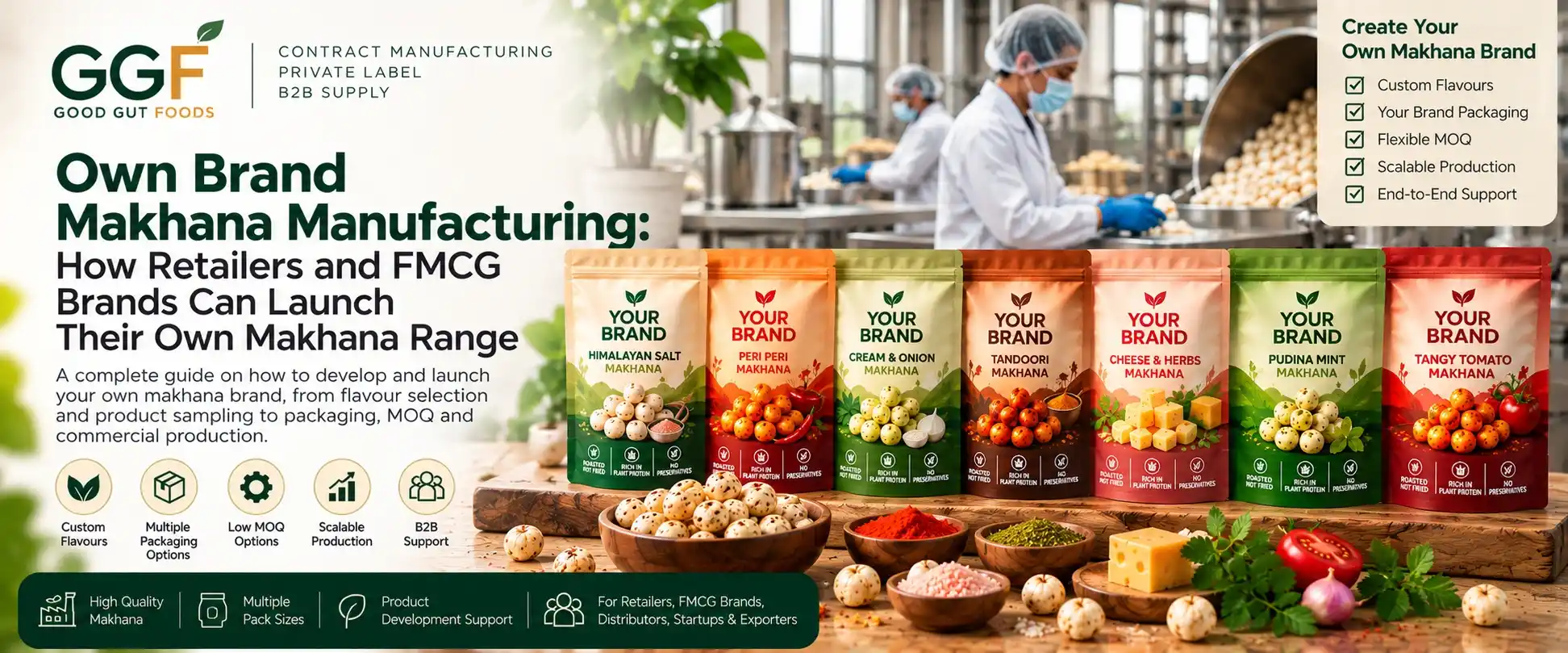
With own brand makhana manufacturing, businesses can work with an experienced food manufacturer to develop, produce and package makhana products under their own brand name.
This allows businesses to focus on branding, distribution and sales while the manufacturing partner manages production.
What Is Own Brand Makhana Manufacturing?
Own brand makhana manufacturing means producing makhana products specifically for a company's own brand.
The manufacturer may support different stages of the process, including:
Makhana sourcing
Roasting
Flavour development
Seasoning
Product sampling
Packaging
Batch production
Quality checks
Bulk supply
Private label manufacturing
The final product is marketed and sold under the buyer's brand.
For example, a retailer could launch its own range of Peri Peri, Cream & Onion, Himalayan Salt and Mint Makhana without owning a makhana manufacturing plant.
Why Are Businesses Exploring Own Brand Makhana?
For retailers and FMCG companies, an own-brand product can provide more control over the product and customer experience.
Instead of selling only third-party brands, a business can create its own product line.
Some potential advantages include:
Brand Ownership
The product is sold under your own brand rather than someone else's.
Product Differentiation
You can select flavours, pack sizes and positioning according to your target customer.
Better Control Over Pricing
Owning the brand gives businesses more flexibility in positioning and pricing their products.
Scalable Manufacturing
Production can be increased as the brand develops demand.
Portfolio Expansion
Makhana can become one product category within a broader healthy-snacking portfolio.
How Does Own Brand Makhana Manufacturing Work?
A typical process can be divided into several stages.
Step 1: Define Your Product
Start by deciding what you want to launch.
Consider:
Plain or flavoured makhana
Target customer
Flavour profile
Pack size
Price positioning
Retail or online distribution
Number of initial SKUs
It is generally better to have a clear product strategy before approaching a manufacturer.
Step 2: Select Your Flavours
Flavour selection can determine how your range is positioned.
Popular flavour directions may include:
Himalayan Salt
Peri Peri
Cream & Onion
Mint
Tandoori
Cheese & Herbs
Custom seasoning profiles
For a new brand, launching a focused range can be more practical than immediately introducing too many SKUs.
Step 3: Develop and Approve Samples
Samples allow the brand and manufacturer to agree on the desired product.
Important factors include:
Crunch
Roast level
Seasoning intensity
Flavour balance
Appearance
Mouthfeel
Overall eating experience
The approved sample becomes an important reference for commercial production.
Step 4: Finalise Packaging
Packaging needs to match the brand's positioning and distribution strategy.
Possible formats can include:
Stand-up pouches
Pillow pouches
PET jars
Composite cans
The right format depends on factors such as price point, shelf presence, product protection and distribution channel.
Step 5: Confirm MOQ and Commercial Terms
Before production begins, clarify:
MOQ per SKU
Pricing
Packaging costs
Product specifications
Payment terms
Production timeline
Logistics
Repeat-order requirements
This is especially important for businesses launching multiple flavours.
Step 6: Commercial Production
Once the product, flavour, packaging and specifications are approved, the manufacturer can move into commercial production.
The objective should be to maintain consistency between the approved sample and subsequent batches.
Own Brand vs Private Label Makhana
The terms own brand manufacturing and private label manufacturing are closely related.
Private label generally means a manufacturer produces a product that is sold under another company's brand.
Own-brand manufacturing describes the business objective from the buyer's side: creating and selling a product under its own brand.
In practical B2B discussions, both terms can refer to a similar manufacturing relationship.
The important part is clearly defining the product specifications, branding, packaging and manufacturing responsibilities.
What Should You Ask a Makhana Manufacturer?
Before selecting a manufacturing partner, ask specific questions rather than focusing only on the quoted price.
Product
What type and grade of makhana do you use?
Can you provide product samples?
Can the flavour be customised?
How is batch consistency maintained?
Manufacturing
What is your MOQ?
Can you support multiple SKUs?
What production capacity is available?
What is the typical lead time?
Can you handle repeat orders?
Packaging
Which packaging formats are available?
Can products be packed under our brand?
What pack sizes can be produced?
Can packaging specifications be customised?
Business
How is pricing calculated?
What are the payment terms?
What documentation is available?
How are large-volume orders planned?
Getting these details before placing an order can make the manufacturing relationship much smoother.
Who Can Launch an Own Brand Makhana Range?
Own-brand manufacturing is not limited to traditional FMCG companies.
It can be relevant for:
Retailers: Build an exclusive healthy-snacking range for their stores.
D2C brands: Launch products under their own online brand.
Distributors: Create products specifically for their distribution network.
FMCG companies: Expand an existing snack portfolio.
Corporate gifting businesses: Develop branded makhana packs for corporate orders.
Exporters: Develop Indian makhana products for international markets.
Startups: Enter the healthy-snacking category without building a manufacturing facility.
How Many Makhana SKUs Should You Launch?
One of the common mistakes new brands make is trying to launch too many products at once.
A more focused approach can be to start with a small number of differentiated flavours and evaluate customer response.
For example, a brand could begin with:
1 classic flavour
2 popular flavoured options
1 differentiated flavour
The range can then expand based on sales, customer feedback and distribution requirements.
This approach can also make inventory and SKU management easier.
Manufacturing Is Only One Part of Building the Brand
A good makhana product alone does not guarantee a successful brand.
Businesses also need to consider:
Packaging design
Positioning
Pricing
Distribution
Digital marketing
Retail placement
Customer reviews
Repeat purchase
Inventory planning
The manufacturing partner should therefore be selected with long-term scalability in mind rather than simply choosing the lowest initial quotation.
Choose a Manufacturing Partner That Can Grow With Your Brand
An own-brand makhana business may start with a small production requirement and eventually move into larger retail, D2C, distribution or export volumes.
That makes scalability important.
The right manufacturing partner should be able to support your journey from product development and sampling to commercial production and repeat B2B supply.
For businesses planning their own makhana brand, Good Gut Foods provides private label and B2B manufacturing solutions with a focus on flavoured makhana and healthy snacks.
If you are planning to launch an own-brand makhana range, explore Flavoured Makhana and discuss your product, flavour, packaging and manufacturing requirements with the Good Gut Foods team.