Launching a food brand - whether it’s artisanal hot sauce, packaged snacks, or a functional beverage line - is an exciting venture. However, selling consumable goods means entering one of the most strictly regulated industries in the world.
Obtaining a food product license isn't just a legal hoop to jump through; it protects your customers from health hazards, builds trust with retail partners, and safeguards your business against heavy fines or mandatory shutdowns.
This comprehensive guide breaks down the licensing framework, key regulatory requirements, and the step-by-step process to get your food product fully certified and market-ready.
1. Why Food Licensing is Mandatory
Regulatory authorities enforce food safety standards to prevent contamination, mislabeling, and deceptive health claims.
A valid food safety license allows you to:
Sell On E-Commerce & Retail Stores: Platforms like Amazon, Walmart, or localized delivery networks require active licensing numbers before onboarding your inventory.
Build Consumer Trust: Printing your official license or registration number on your packaging proves compliance with health guidelines.
Prevent Regulatory Penalties: Operating an uncertified food business leads to steep financial penalties, product confiscation, or legal action.
2. Knowing Your Licensing Tier
Depending on your business scale, location, and annual turnover, regulators categorize food businesses into distinct tiers.
Micro/Basic Registration
Ideal for small-scale startups, home-based bakeries, or micro-traders operating under low annual revenue caps. This involves simple self-declaration and minimal documentation.
State or Regional License
Required for mid-sized manufacturers, regional distribution centers, or dark kitchens operating within a single state or province.
Central or National License
Mandatory for large-scale production facilities, multi-state commercial operations, major e-commerce brands, or importers/exporters.
3. Core Document Requirements Checklist
While exact paperwork varies by jurisdiction (e.g., FSSAI in India, FDA Food Facility Registration in the U.S., or EFSA in Europe), most food safety authorities require the following core set of documents:
4. Step-by-Step Licensing Process
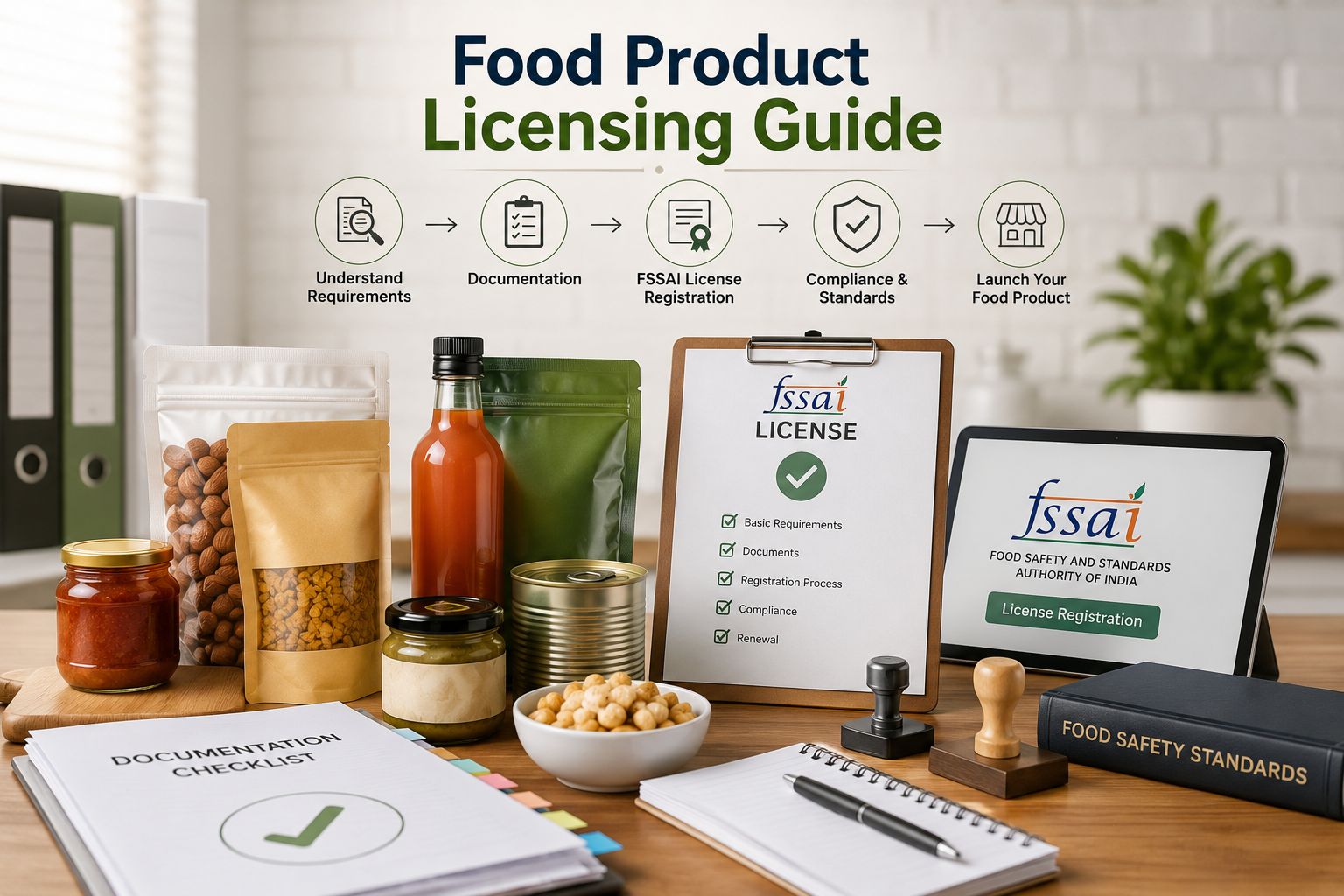
1. Determine Category --> 2. Facility Setup --> 3. Online Filing --> 4. Inspection --> 5. Approval
Step 1: Select the Correct Category
Choosing the wrong business type or revenue tier is the primary cause of application rejections. Identify whether your primary business activity is Manufacturing, Packaging, or Distributing.
Step 2: Prepare Your Premises
Before inspectors visit, your production facility must comply with basic sanitation rules:
Separate raw material storage from finished goods.
Adequate ventilation, stainless steel food-grade contact surfaces, and washable walls.
Pest control systems and clean, tested water lines.
Step 3: Submit Online Application & Pay Government Fees
Most jurisdictions now process applications through dedicated online portals (such as FoSCoS in India or FDA FURS in the US). Complete the application form, upload your scanned documents, and pay the regulatory fees.
Step 4: Premises Verification & Safety Inspection
For state and commercial-level licenses, a Food Safety Officer may conduct an on-site audit. They verify hygiene practices, temperature control setups, waste disposal methods, and record-keeping processes.
Step 5: License Issuance & Packaging Compliance
Once approved, you will receive a digital license containing a unique identification/registration number. This number, along with standard nutrition facts and ingredient declarations, must be clearly printed on your commercial packaging.
5. Don't Forget: Mandatory Packaging & Label Rules
Getting licensed is only half the battle; your final retail package must also comply with mandatory labeling laws:
Clear Product Name: Precise description of what the item actually is.
Ingredient List: Ordered from highest percentage to lowest percentage by weight.
Allergen Warnings: Bold callouts for milk, nuts, soy, gluten, or common allergens.
Expiration & Batch Info: "Best Before" or "Use By" date along with a traceable batch/lot number.
License Number: Distinct display of your official licensing ID logo and registration number.