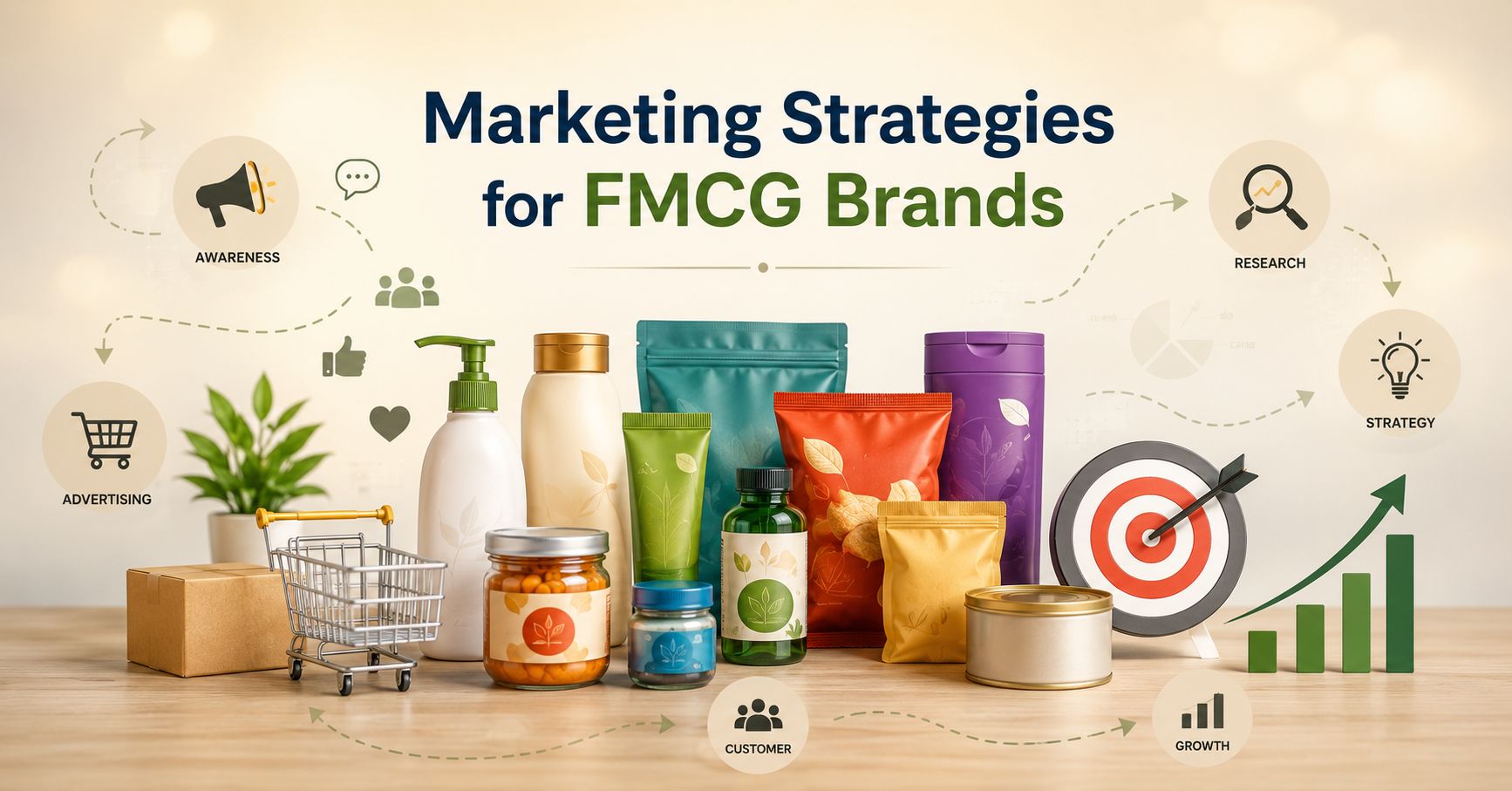
The Fast-Moving Consumer Goods (FMCG) market is undergoing a fundamental shift. Historically, FMCG growth relied on a straightforward playbook: mass advertising + prime retail shelf placement = market share.
Today, rising digital channels, AI-assisted consumer purchasing, and shifting brand loyalties mean that mere availability isn't enough. Brands must generate immediate visual attention on physical shelves while simultaneously winning the algorithmic, data-driven battle online.
Whether you're managing an established enterprise CPG brand or scaling a challenger product line, here are the most effective FMCG marketing strategies to build market share and customer loyalty today.
1. Optimize for "Acommerce" & Generative Search (GEO)
Consumers increasingly rely on AI search assistants, voice tools, and automated replenishment services (e.g., smart home devices, automated shopping assistants) to recommend household products.
The Strategy: Shift from traditional SEO to Generative Engine Optimization (GEO). Ensure your product data, ingredients, usage contexts, and reviews are structured in a clean, machine-readable format across online databases.
Action Item: Standardize your product taxonomy on digital storefronts (Amazon, retailer portals, brand site) so AI tools consistently list your brand as the primary option for niche queries (e.g., "best eco-friendly sensitive skin laundry detergent").
2. Master "Treatonomics" with Micro-Indulgence Marketing
Economic factors have shifted consumer spending toward small, frequent, high-gratification purchases. Known as Treatonomics, shoppers may hold back on high-ticket luxury items while actively seeking premium, mood-boosting moments in everyday goods.
The Strategy: Position everyday FMCG items as accessible luxuries. Use limited-edition packaging, flavor/fragrance drops, or collaborative releases to spark excitement.
Action Item: Create "status micro-treats"—such as artisanal flavor variants, upgraded packaging textures, or seasonal co-branded releases—that give buyers an easy, low-cost emotional lift.
4. Modernize Packaging for Pop and Purpose
Packaging serves a dual purpose: it is your physical advertisement on the retail shelf and your unboxing asset on social media.
Visual Salience: In a high-traffic aisle, packaging needs distinctive brand assets (bright colors, unique shapes, iconic characters) that anchor consumer memory.
Transparent Claims: Modern buyers quickly scan for certifications—non-GMO, cruelty-free, recyclable, or organic. Keep key value claims clear and clutter-free on the front panel.
5. Build Value-Led "Living Loyalty" Programs
Transaction-based loyalty programs (points for dollars spent) rarely create long-term emotional resonance for low-cost, high-frequency items.
The Strategy: Implement Living Loyalty—programs that reward actions reflecting consumer values. Reward customers for recycling packaging, taking wellness challenges, or sharing UGC (User-Generated Content).
Action Item: Integrate QR codes on physical packaging that link directly to brand experiences, digital rewards, or community initiatives.
Executing Your Strategy: The Checklist
To ensure your FMCG marketing drives measurable ROI, balance short-term promotional lifts with long-term brand equity:
Balance Trade Promotions with Equity: Avoid relying solely on price discounts, which erode margin and brand perception. Invest in storytelling and value creation.
Align Trade Marketing & Digital Teams: Ensure online campaigns run in tandem with end-cap displays, sampling programs, and retailer ad networks.
Audit Your Product Taxonomy: Make sure product details across all retail channels are clean, structured, and easy for search engines and AI assistants to parse.